
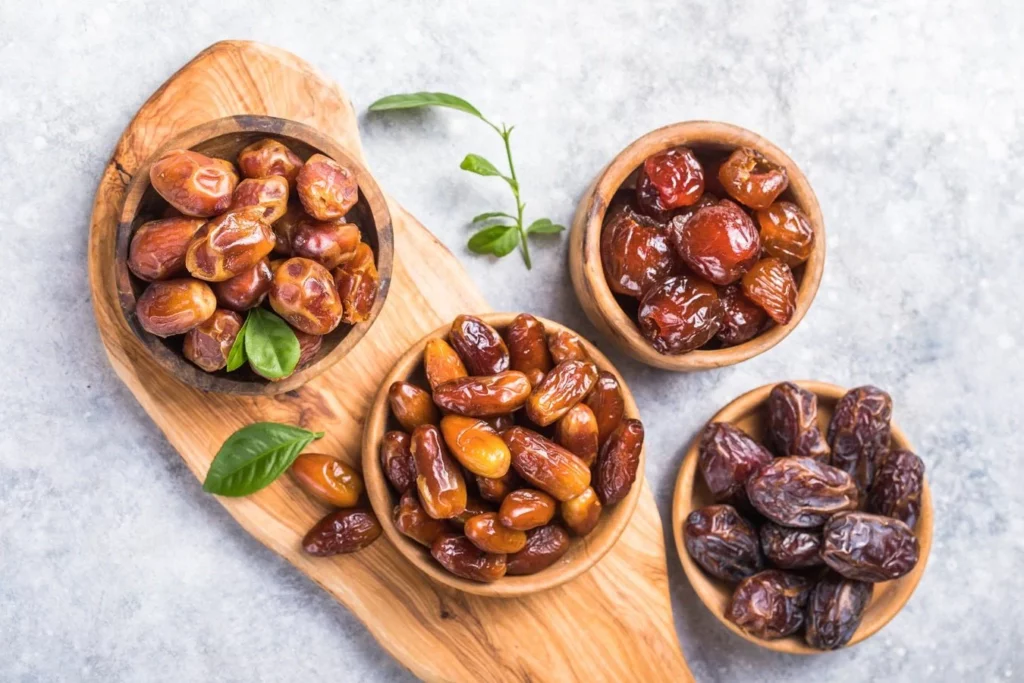
Heritage date varieties Malaysian suppliers actually stock
Walk into most kurma shops in Malaysia and three names come up more than any others: Ajwa, Safawi and Mariami. Each has a distinct growing region, texture and price tier, and knowing the difference helps explain why prices can range so widely for what looks like the same dark, wrinkled fruit.
Ajwa
Ajwa is grown around Madinah in Saudi Arabia and is usually the most expensive of the three, partly because the growing region is limited and partly because demand from Malaysia and the wider region stays high year-round. The fruit is small, very dark, and dry rather than sticky, with a firmer bite than most other varieties.
Safawi
Also from the Madinah region, Safawi is softer than Ajwa and slightly larger, with a flavour that leans less astringent. It sits just below Ajwa in price for most Malaysian suppliers and is a common substitute when Ajwa stock runs low or a buyer wants a similar profile at a lower cost.
Mariami
Mariami comes from Iran rather than Saudi Arabia, and it's the softest and most affordable of the three — dense, caramel-sweet, and better suited to daily eating than to gifting or hampers.
Why origin is worth asking about
Country of origin affects more than price. Import routes, harvest timing and even how the fruit is dried all shift depending on where it comes from, and a supplier who can tell you the harvest year and origin region for a given batch is usually managing stock more carefully than one who just labels a box "premium dates."
Buying by variety, not just by name
Because heritage varieties carry a price premium, some Malaysian retailers blend cheaper stock under a well-known name. Checking texture and asking for origin documentation protects against this — a genuine Ajwa should feel dry and firm, not soft and sticky like a Mariami repackaged under a different label.
For a look at how a premium import supplier documents its own stock, see this Medjool supplier guide.