
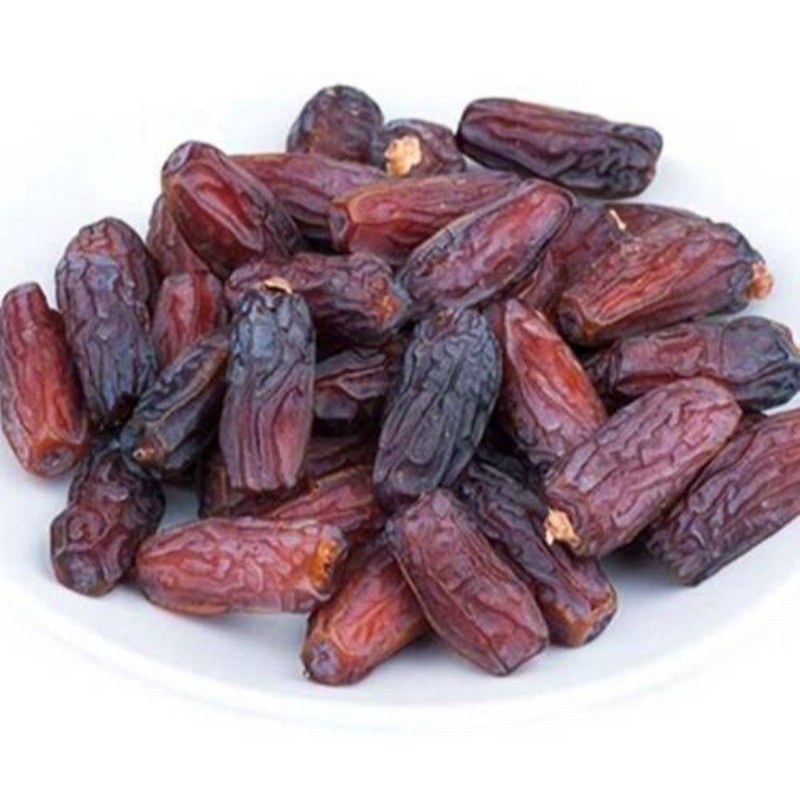
“Fresh vs dried” sounds like a straightforward choice, but with Ajwa it is barely a choice at all. Buah kurma ripens through three stages — khalal, rutab, tamr — and almost none of it leaves Madinah at the soft, wet rutab stage. It gets eaten locally during the short harvest window instead. Whatever a listing calls fresh or dried dates once it reaches Malaysia, Ajwa here is tamr: fully dried, shelf-stable, shipped that way because rutab-stage fruit doesn’t survive the trip.
Be wary of “fresh Ajwa” listings
A seller marketing tamr-stage Ajwa as fresh is usually stretching the word, not lying outright — the dates genuinely just left the packing house. But it is not the same as rutab, and it shouldn’t carry a premium for something the product isn’t. If freshness matters to you, ask when the batch was packed, not whether it’s called “fresh.”
What good tamr-grade Ajwa looks like
Skin should be dark and matte. A high-gloss shine usually means a sugar-syrup glaze added to mask an older batch, not natural moisture. The flesh should be soft but not sticky-wet — sticky-wet is syrup, not the date. Ajwa is known for a small pit relative to its flesh, and for a mild cocoa-and-toffee bitterness that’s part of the variety, not a sign it’s gone off. A sharp, burnt-sugar edge instead of that bitterness usually means over-processing.
Ajwa’s sibling from the same region
Safawi comes from the same Madinah growing belt, sold dried the same way, but softer and without as much of that toffee-bitter edge. It’s worth trying if you want an Ajwa-adjacent taste at a lower price point — our Kurma Safawi guide covers grading for it in more detail, and the Kurma Madinah guide covers how Madinah-origin varieties are told apart at the point of sale.
Buying it
Since fresh rutab-stage Ajwa isn’t realistically available here, the real decision is which dried grade and packer to trust, not fresh versus dried. See our Ajwa wholesale guide for what to look for when buying in bulk.