
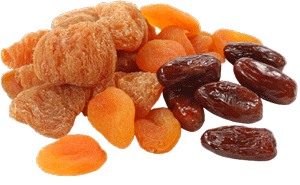
Whether a diet plan makes menopause easier depends on which diet, which symptom and which study you look at. Here is what the NHS advises, what diet, soy and weight-loss research measured, and what the studies involving dates actually looked at.
NHS advice on food during menopause
The NHS page on things you can do to help menopause and perimenopause symptoms says eating well, exercising and looking after your mental wellbeing can help with symptoms. It suggests trying to eat a healthy, balanced diet. If you can, it says to eat calcium-rich food like milk, yoghurt and kale to keep your bones healthy.
To help with hot flushes and night sweats, the page lists avoiding or cutting down on possible triggers: spicy food, caffeine, hot drinks, smoking and alcohol. Regular exercise and keeping to a healthy weight are on the same list. For bones, it adds plenty of fruit, vegetables and sources of calcium, strength exercises, getting some sunlight on your skin, and vitamin D supplements.
Weight gain during perimenopause and menopause is common, says the NHS symptoms page. Symptoms usually last for 7 to 9 years, and sometimes longer.
Weight change and the Women's Health Initiative diet
In the US Women's Health Initiative Dietary Modification trial, women were put on a diet designed to lower fat intake and raise fruit, vegetable and whole grain intake. Kroenke and colleagues (2012) analysed hot flashes and night sweats in 17,473 postmenopausal women aged 50 to 79 from that trial, none of them taking menopausal hormone therapy.
Among women who had these symptoms at baseline, assignment to the diet was related to a higher likelihood of the symptoms going away (odds ratio 1.14). Women who lost 10% or more of their baseline body weight by year 1 were more likely to lose the symptoms than women whose weight stayed the same (odds ratio 1.56).
For moderate or severe symptoms, the result was different. Large weight loss, over 22 lb, was related to those symptoms ending, but the dietary changes were not. The authors wrote that weight loss within a healthy dietary change "may help".
Two trials of a vegan diet with soybeans
Barnard and colleagues at the Physicians Committee for Responsible Medicine ran two randomised trials of a low-fat vegan diet with half a cup (86 g) of cooked soybeans a day. Each lasted 12 weeks. The control group made no changes to their diet.
The 2021 trial enrolled 38 postmenopausal women reporting two or more hot flashes a day. Total hot flashes fell 79% in the diet group against 49% in the control group. For moderate to severe hot flashes the drops were 84% and 42%.
The 2023 trial enrolled 84 postmenopausal women with at least two moderate to severe hot flashes a day. These fell by 88% on the diet and 34% in the control group. At 12 weeks, 50% of the women who completed the diet arm reported none at all.
Both trials tested the vegan diet and the soybeans together against no change. So they can't show whether the diet, the soybeans or both made the difference.
A nine-year cohort of Australian women
In a prospective cohort study, Herber-Gast and Mishra (2013) followed 6,040 Australian women with a natural menopause for 9 years. Women in the top fifth for a fruit eating pattern had lower odds of hot flushes and night sweats than those in the bottom fifth (odds ratio 0.81), and the same held for a Mediterranean-style pattern (0.80). A high-fat, high-sugar pattern was linked to higher risk (1.23). This kind of study shows an association. It does not prove the food caused the difference.
What soy isoflavone pills showed
Taku and colleagues (2012) pooled double-blind randomised trials that compared extracted or synthesised soy isoflavones with placebo. At a median of 54 mg a day, taken for 6 weeks to 12 months, isoflavones cut hot flash frequency by 20.6% and severity by 26.2% compared with placebo.
A JAMA review by Franco and colleagues (2016) covered 62 studies and 6,653 women. Phytoestrogen use was associated with 1.31 fewer hot flashes a day and a lower vaginal dryness score. It was not associated with fewer night sweats. Of the randomised trials included, 46 (74%) had a high risk of bias in 3 or more areas, and the authors described the reductions as "modest", adding that more rigorous studies are needed.
Before taking herbal supplements or complementary medicines, the NHS says to talk to a doctor.
Where dates come into the research
Shirdel and colleagues (2025) reviewed 21 studies of date fruit products and female health. The review's full text places three of them in the menopause stage. Only one of those three used the fruit itself.
That trial, by Kurniawan in Indonesia (2023), included 44 perimenopausal women aged 42 to 48. One group ate seven Ajwa dates (60 to 80 g) every day for 8 weeks and the other had no intervention. According to the review, anti-Mullerian hormone (AMH) fell less in the date group, which the authors read as better maintenance of ovarian reserve.
The other two trials gave date palm pollen extract capsules, not dates. In the trial by Loripoor and colleagues, 110 postmenopausal women took a 300 mg capsule or a placebo for 4 weeks. The authors concluded the extract "had no effect on improving sexual disorders". The review's table lists the second pollen trial with 60 women over 5 weeks and marks it significant for vaginal lubrication and pain during sex.
None of the three measured hot flushes, night sweats or sleep. The review's abstract says date products helped ease dyspareunia in menopause, yet its own table shows that result came from a pollen capsule trial.
Fitting dates into a balanced diet
A 30g portion of dried fruit such as dates counts as 1 of your 5 A Day, according to the NHS 5 A Day guide. The same guide says dried fruit should be eaten at mealtimes, not as a snack between meals, to reduce the impact on teeth.
Dates are high in sugar and low in calcium. Per 100 g, USDA FoodData Central record 168191 lists Medjool dates at 66.5 g of total sugars and 64 mg of calcium. The NHS calcium page says adults need 700mg of calcium a day, so 100 g of Medjool dates gives less than a tenth of that. Among the sources of calcium that page lists are milk, cheese and other dairy foods, green leafy vegetables such as curly kale, soya drinks with added calcium, and fish where you eat the bones.
When to see a GP
Contact a GP, the NHS says, if you think you have symptoms of menopause or perimenopause and want to know your options, or if you have symptoms such as a fast heartbeat. The same applies if you have not had a period for 12 months or more and then have any vaginal bleeding.
You can read more about this site on the About Us page, and other articles are on the blog.
This article is general information, not medical advice. Talk to a GP or pharmacist about menopause symptoms and before starting any supplement.
References
- NHS. Things you can do to help menopause and perimenopause symptoms. nhs.uk
- NHS. Symptoms of menopause and perimenopause. nhs.uk
- Kroenke CH, Caan BJ, Stefanick ML, et al. Effects of a dietary intervention and weight change on vasomotor symptoms in the Women's Health Initiative. Menopause. 2012;19(9):980-8. PMID 22781782
- Barnard ND, Kahleova H, Holtz DN, et al. The Women's Study for the Alleviation of Vasomotor Symptoms (WAVS): a randomized, controlled trial of a plant-based diet and whole soybeans for postmenopausal women. Menopause. 2021;28(10):1150-1156. PMID 34260478
- Barnard ND, Kahleova H, Holtz DN, et al. A dietary intervention for vasomotor symptoms of menopause: a randomized, controlled trial. Menopause. 2023;30(1):80-87. PMID 36253903
- Herber-Gast GC, Mishra GD. Fruit, Mediterranean-style, and high-fat and -sugar diets are associated with the risk of night sweats and hot flushes in midlife: results from a prospective cohort study. Am J Clin Nutr. 2013;97(5):1092-9. PMID 23553160
- Taku K, Melby MK, Kronenberg F, Kurzer MS, Messina M. Extracted or synthesized soybean isoflavones reduce menopausal hot flash frequency and severity: systematic review and meta-analysis of randomized controlled trials. Menopause. 2012;19(7):776-90. PMID 22433977
- Franco OH, Chowdhury R, Troup J, et al. Use of plant-based therapies and menopausal symptoms: a systematic review and meta-analysis. JAMA. 2016;315(23):2554-63. PMID 27327802
- Shirdel E, Rahimi F, Jafarzadeh M, Abdi F, Rahnemaei FA. Improving female health at various life stages: a systematic review of the impact of date fruit products. Sultan Qaboos Univ Med J. 2025;25(1):38-49. PMID 40641695
- Loripoor M, Esmaeili F, Vazirinejad R, Dan S. The effect of palm pollen extract on sexual disorders in postmenopausal women: a randomized clinical trial. Int J Community Based Nurs Midwifery. 2023;11(1):14-22. PMID 36650842
- U.S. Department of Agriculture. FoodData Central, SR Legacy 168191: Dates, medjool. fdc.nal.usda.gov
- NHS. 5 A Day: what counts? nhs.uk
- NHS. Calcium. nhs.uk