
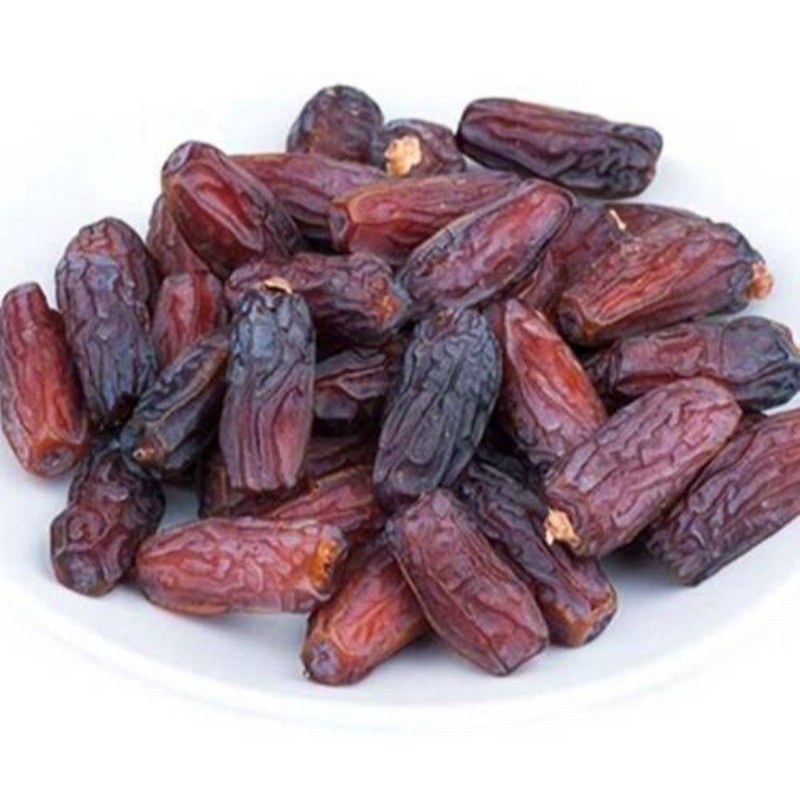
A lot of people who search for Kurma Nabi end up looking at a box of Mabroom and wondering if it is the same thing. It is not. "Kurma Nabi" is a market name used in Malaysia for Ajwa. Mabroom is a separate variety. Both come from the Madinah region of Saudi Arabia, and that shared address is where most of the confusion starts. This page sorts out the names first, then covers what Mabroom actually is and when it makes sense to buy it instead of, or as well as, Ajwa. Stock for Kurma Mabroom Malaysia is linked here if you already know what you want.
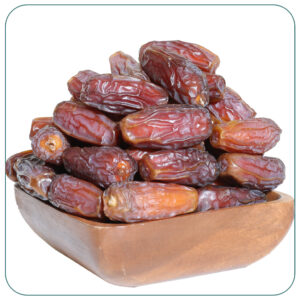
Three dates, one region
Walk into any kurma shop before Ramadan and the Madinah shelf usually holds three names side by side.
Ajwa is the small, roundish one. Near-black, finely wrinkled skin, soft. This is the date sold as Kurma Nabi.
Safawi is longer than Ajwa, dark brown to black, soft and chewy.
Mabroom is the odd one out. It is long and slender, reddish-brown rather than black, and semi-dry, so it is chewier and less sticky than the other two.
If a carton is labelled "Kurma Nabi" but the dates inside are long and reddish, ask the seller what variety it really is. That is not a test of whether the dates are genuine, since colour and size shift between batches and grades. It is just a sign the label and the box might not match, and the label (variety, country, importer) is what you are paying for. Our guide to Kurma Madinah goes through the region's varieties in Malay.
Why the name matters when you buy
Names carry expectations. Someone paying for Kurma Nabi expects Ajwa, and someone who likes a firmer, chewier date may be happier with Mabroom anyway. Mabroom has its own following and does not need to borrow anyone's name, so buy it as Mabroom and judge it as Mabroom.
Grades complicate the comparison. A, AA, AAA and Jumbo are each importer's own size sorting, not a shared standard, so "Grade AA Mabroom" from two suppliers can be two quite different boxes. Compare net weight and price per kilo, and ask for a photo of the actual batch. Our note on date prices and grading in Malaysia explains how sellers sort and price.
When Mabroom is the better pick
Mabroom's semi-dry flesh is the practical reason to choose it. It travels well in a bag, holds its shape when slit and stuffed, and does not stick to the next date in a tray. That makes it useful for umrah door gifts, hantaran trays that have to look tidy for a whole day, and kenduri plates that sit out for hours.
Ajwa wins when the buyer specifically wants Ajwa. Plenty of people do, and no amount of talk about texture changes that. A sensible middle path for open houses is a mixed tray: a row of black Ajwa, a row of Safawi, and a row of reddish Mabroom. The colours sort themselves and guests can pick by taste.
Questions we hear about Mabroom
Is Mabroom grown in Malaysia?
No. Malaysia has no commercial date-growing trade, so every Mabroom carton here is imported, and the label should name Saudi Arabia.
When is it freshest?
Gulf dates are mostly harvested from late summer into autumn, and new-season cartons reach Malaysia some weeks after that. Demand peaks before Ramadan and around Hari Raya, so order early for those weeks.
How do I keep it?
Sealed, it sits happily in a cool cupboard. Once opened, use an airtight container, and move it to the fridge if your kitchen runs warm and humid.
Can I order Ajwa and Mabroom together?
Yes. See our page on buying Ajwa in bulk, or contact us for a mixed carton. If you would rather have the dates arranged for you, you can find beautifully arranged platters of dates online.