
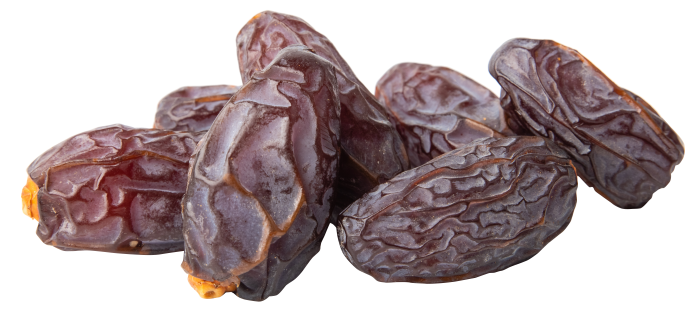
Most lists you find under the search term dates wholesaler Malaysia list "Madinah dates" as if it were one product. It is not. On a wholesale price list the word Madinah usually covers several different dates, and a buyer who orders "kurma Madinah" without naming one leaves the choice to the supplier.
This guide is for anyone buying Madinah stock in bulk, whether for a shop shelf or a run of umrah gift packs. It covers what to put on a quote request and what to ask before you commit.
Every Madinah date here is imported
Start with one plain fact. Malaysia has no commercial date-growing trade, so every Madinah date in a Malaysian store came in from Saudi Arabia. A wholesaler worth using can tell you which shipment a carton came from. A supplier who talks about "local" Ajwa or Safawi is guessing, and guessing is a poor basis for a large order.
Name the variety, not just the city
Three Madinah dates turn up most often on Malaysian wholesale lists:
- Ajwa is small and roundish, near-black, with finely wrinkled skin and a soft bite. In the Malaysian market it is also sold as "Kurma Nabi". That is a trade name for Ajwa, not a separate variety.
- Safawi comes from the same region but is longer than Ajwa, dark brown to black, soft and chewy.
- Mabroom is long and slender, reddish-brown, semi-dry and chewy.
So when you ask for a quote, write the variety name on the request. "Ajwa, 1kg boxes, 20 cartons" gets you a price you can compare with the next supplier's. "Kurma Madinah, best grade" gets you whatever the supplier has most of this week. The site's guide to choosing Kurma Safawi and the article on Kurma Mabroom in Malaysia go into each one in more detail. The Kurma Madinah origin guide covers the wider group.
Grades are the importer's own sizing
Ajwa and Safawi are often sold as Grade A, AA, AAA or Jumbo. There is no international standard behind those letters. Each importer sorts by size and appearance in its own way, so one supplier's AA can look like another's A. Ask the wholesaler what their grades mean in practice, then ask for a sample carton from the grade you plan to order. Compare samples, not labels. The notes on date grading systems in Malaysia look at how grading and price fit together.
Plan around the peaks
Madinah dates sell hardest before and during Ramadan, and again around Hari Raya. Hantaran trays at weddings, kenduri and umrah gift orders keep demand going for the rest of the year. Middle-East dates are mostly harvested from late summer into autumn, and new-season stock reaches Malaysia some weeks after that. A wholesaler who knows the trade can tell you roughly when their next Ajwa or Safawi shipment is due and how long current stock will last.
If you need a large supply of dates for a mosque iftar programme or a company Ramadan hamper, book it well before the fasting month. Suppliers fill the early orders first.
Questions to put to a Madinah wholesaler
- Which varieties do you sell as "Madinah", and which are in stock right now?
- What do your grades mean, and can I see a sample carton of the grade I will order?
- Is this current-season stock or older, and when is the next shipment due?
- What is the carton weight and minimum order, and what lead time do you need before Ramadan?
- How is stock kept between your store and my door?
For background on bulk buying across a diverse selection of date varieties, there is a separate wholesale prices guide on this site. Read it for context, then get real quotes. No figure in a blog post replaces a written quote with the variety, grade, carton weight and delivery date filled in.
What "best" means for Madinah dates
The best wholesaler here is the one that names the variety on every line of the quote and can explain its own grades without hedging. Price matters too. It just only means something once you are comparing the same date at the same size.