
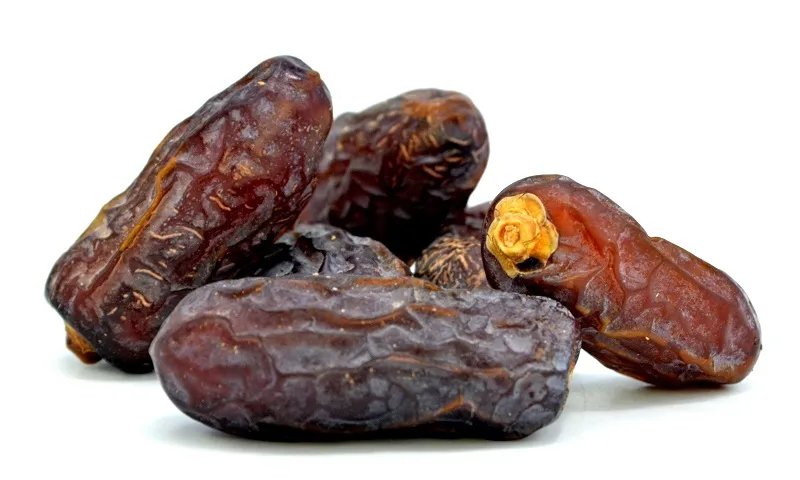
Sweet is the default use for dates, and Kurma Mariami AA earns that reputation — thick caramel flesh, soft enough to eat with no prep. But dates also carry a job description a lot of cooks never give them: a natural thickener and sweetener that stands in for sugar or honey in savoury dishes. Three ways to try that at home follow below, no special equipment.
1. Date and cheese bites (10 minutes)
Halve and pit six to eight dates. Push a small cube of feta or hard goat's cheese into each half. Wrap a thin strip of turkey bacon around it if you like a smoky edge, then grill or pan-fry for one to two minutes a side until the outside blisters slightly. Serve warm. This works as a starter for an open-house table because it needs no plating skill and disappears fast.
2. Beef stew with dates (2-3 hours, mostly unattended)
Brown beef cubes, add onion, garlic, cumin, and cinnamon, then cover with stock and simmer as you normally would for a stew. Forty minutes before serving, stir in four or five chopped dates. They break down almost completely and thicken the sauce a little, taking the edge off the spice without making the dish taste sweet outright. This is the same principle behind lamb tagines that pair meat with dried fruit.
3. Date-mustard glaze for grilled chicken (15 minutes)
Blend six pitted dates with two tablespoons of vinegar, one tablespoon of mustard, and enough water to loosen it into a spreadable paste. Brush it over chicken thighs before grilling or roasting. The sugar in the dates caramelises under heat the way honey does, but the paste has more body and clings to the meat better than a thin glaze.
Picking the right date for each job
Once a date is chopped or blended, its firmness stops mattering — a softer, cheaper grade works fine in the stew or the glaze. Save a firmer, better grade like Mariami AA for the cheese bites, where the date stays whole and its texture is what people notice first. If you're new to comparing grades, our piece on dates in Malaysian cuisine and how pricing works covers that ground, and the Medjool comparison is useful if you're deciding between varieties for a specific dish.
Keep cooking dates sealed and refrigerated the same way you'd store any dried fruit — heat and open air dry them out fast. If your dates are for snacking rather than cooking, the stem-on dates style is a softer, different product worth trying separately.