
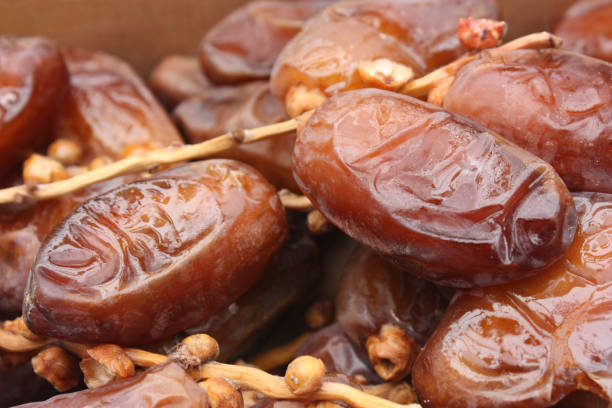
"Kurma tangkai" is the branch format — dates left attached to the woody stem instead of stripped and boxed loose. It's not a separate variety, just a way of selling the same fruit, and Ramadan is when almost all of it moves. Outside the fasting month a shop might stock a handful of bunches for decoration or gifting; during Ramadan it's often the first thing that sells out.
Why tangkai spikes harder than loose dates
Overall date demand rises across Ramadan for the obvious reason — it's the fruit used to break fast. But dates suppliers will tell you tangkai rises faster than that baseline because of what it's used for beyond eating: hampers, hantaran, office gifts, and the visual of a full bunch on a table during open house. None of that applies the rest of the year, so the format effectively has one real selling season.
That seasonality makes it a harder product to stock than loose dates. A supplier can hold loose dates in cold storage indefinitely and sell them steadily all year. Tangkai bunches are bulkier to store, more fragile to move, and largely dead stock outside Ramadan — so most importers bring in just enough for the season and don't try to carry a year-round inventory of it.
The variety question
Kurma tangkai almost always means a firmer, drier variety — Deglet Noor is the standard one you'll see sold this way. Soft varieties like Ajwa or Medjool don't hold up well left on the stem; they're heavier and wetter, so the bunch sags and the fruit bruises against itself before it even reaches a shop shelf. If you see a soft variety advertised as tangkai, look closely at the bunch before paying the premium — it's often been re-attached to a stem for the photo rather than harvested that way.
Buying it without getting a bad bunch
Check the stem first. It should be stiff and dry-looking; a stem that bends easily or feels tacky has likely been sitting in humid storage too long. Then check how the dates sit on it — they should be snug against the branch, not held by a sliver of skin that will snap the first time the bunch is moved. A few loose or fallen dates in the wrapping is normal; a stem that's mostly bare with fruit rattling around the packaging is not.
Expect to pay more per kilo than for loose dates of the same grade — the format costs more to pack and ship, and yield loss from breakage is higher, so that gets built into the price. It's a fair trade if the bunch is going somewhere it'll be seen; it's not worth it if you're just buying dates to eat at home, where loose packaging of the same variety and grade gets you the same fruit for less.
Once you're home, keep the bunch somewhere cool and out of direct sun rather than sealed tight in plastic — a stem with any residual moisture left in an airtight bag is how mould starts at the base. For anyone buying early to beat the Ramadan rush, check the bunch every few days rather than storing it and forgetting it until the week it's needed.